
wonder, miracle in Slovenian
Do you know wonder, miracle in Slovenian? How to use wonder, miracle in Slovenian and how to say wonder, miracle in Slovenian? How to write wonder, miracle in Slovenian? Now let's learn how to say wonder, miracle in Slovenian language.
wonder, miracle translate to Slovenian meanings: čudež.
In other words, čudež in Slovenian is wonder, miracle in English.Click to pronunce
| English | Slovenian |

|
|
| wonder, miracle | čudež |
How to use wonder, miracle in Slovenian?
Meaning of wonder, miracle in Slovenian language is: čudež.
Other words in Slovenian
webcast, wash, wheels, wayne, wishes,
Read more Synonyms and Antonyms of wonder, miracle
Why we should learn Slovenian language?
There are many, many reasons why learning a new language is a good idea. It allows you to communicate with new people. It helps you to see things from a different perspective, or get a deeper understanding of another culture. It helps you to become a better listener. It even has health benefits, as studies have shown that people who speak two or more languages have more active minds later in life!
7 reasons to learn a Slovenian language
- Makes you smarter.
- Boosts academic achievement.
- Provides professional and career advantages.
- Provides broader access to education and information.
- Gives you more social and global skills.
- Increases national security.
- Life is more interesting.
How to say wonder, miracle in Slovenian?
čudež. This is your most common way to say wonder, miracle in čudež language. Click audio icon to pronounce wonder, miracle in Slovenian::
| English | Slovenian |
|
|
|
| wonder, miracle | čudež |
How to write wonder, miracle in Slovenian?
The standard way to write "wonder, miracle" in Slovenian is: čudež
Alphabet in Slovenian
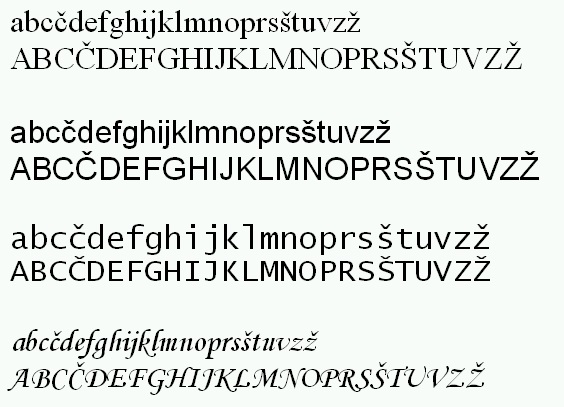
About Slovenian language
See more about Slovenian language in here.
Slovene (/ˈsloʊviːn/ (audio speaker iconlisten) or /sloʊˈviːn, slə-/), or alternatively Slovenian (/sloʊˈviːniən, slə-/ (audio speaker iconlisten); slovenski jezik or slovenščina), is a South Slavic language spoken by the Slovenes. It is spoken by about 2.5 million speakers worldwide, the majority of whom live in Slovenia, where it is one of the three official languages. As Slovenia is part of the European Union, Slovene is also one of its 24 official and working languages.
Standard Slovene is the national standard language that was formed in the 18th and 19th century, based on Upper and Lower Carniolan dialect groups, more specifically on language of Ljubljana and its adjacent areas. The Lower Carniolan dialect group was the dialect used by Primož Trubar while he also used Slovene as spoken in Ljubljana, since he lived in the city for more than 20 years. It was the speech of Ljubljana that Trubar took as a foundation of what later became standard Slovene, with small addition of his native speech, that is Lower Carniolan dialect Trubar's choice was later adopted also by other Protestant writers in the 16th century, and ultimately led to the formation of more standard language. The Upper dialect was also used by most authors during the language revival in the 18th and early 19th centuries, and was also the language spoken by France Prešeren, who, like most of Slovene writers and poets, lived and worked in Ljubljana, where speech was growing closer to the Upper Carniolan dialect group. Unstandardized dialects are more preserved in regions of the Slovene Lands where compulsory schooling was in languages other than Standard Slovene, as was the case with the Carinthian Slovenes in Austria, and the Slovene minority in Italy. For example, the Resian and Torre (Ter) dialects in the Italian Province of Udine differ most from other Slovene dialects.[citation needed]
The distinctive characteristics of Slovene are dual grammatical number, two accentual norms (one characterized by pitch accent), and abundant inflection (a trait shared with many Slavic languages). Although Slovene is basically an SVO language, word order is very flexible, often adjusted for emphasis or stylistic reasons. Slovene has a T–V distinction: second-person plural forms are used for individuals as a sign of respect.
.Writing system in Slovenian
Latin (Slovene alphabet), Slovene Braille
Slovenian Speaking Countries and Territories
Slovenian Speaking Countries and Territories: Official language in Slovenia, European Union; Recognised minority language in Austria, Italy.

Slovenian native speakers
Slovenian native speakers: 2.5 million (2010).
Slovenian language code
Slovenian language code is: sl.
Conclusion on wonder, miracle in Slovenian
Now that you have learned and understood the common ways of saying wonder, miracle in Slovenian is "čudež", it's time to learn how to say wonder, miracle in Slovenian. This will hopefully give you a little motivation to study Slovenian today.
čudež in Slovenian meanings wonder, miracle in English.